Home / The wider universe
ASTROSKYGUIDE
Galaxies: The wider universe
Galaxies: The wider universe. Explore scientifically careful astronomy explanations with atmospheric, clearly labelled illustrations. This guide makes the question, evidence and next steps easier to follow while keeping the scope of the page clear. Use the topic links to choose the next explanation or open a focused enquiry.
On this page
From stars to galaxies
Galaxies provide a way to think beyond individual stars, but scale becomes clearer when you move through it deliberately. Begin with a star, consider its local environment and then place it within a larger system. A picture can compress those relationships into one view even when the physical distances are very different. Use the image as an invitation to ask what is being shown. The caption, instrument and scale matter as much as the visual impression.
Build your reading notes as a scale ladder rather than a list of impressive objects. Record the subject of each image, the physical relationship it illustrates and the question that prompted the comparison.
Light carries evidence
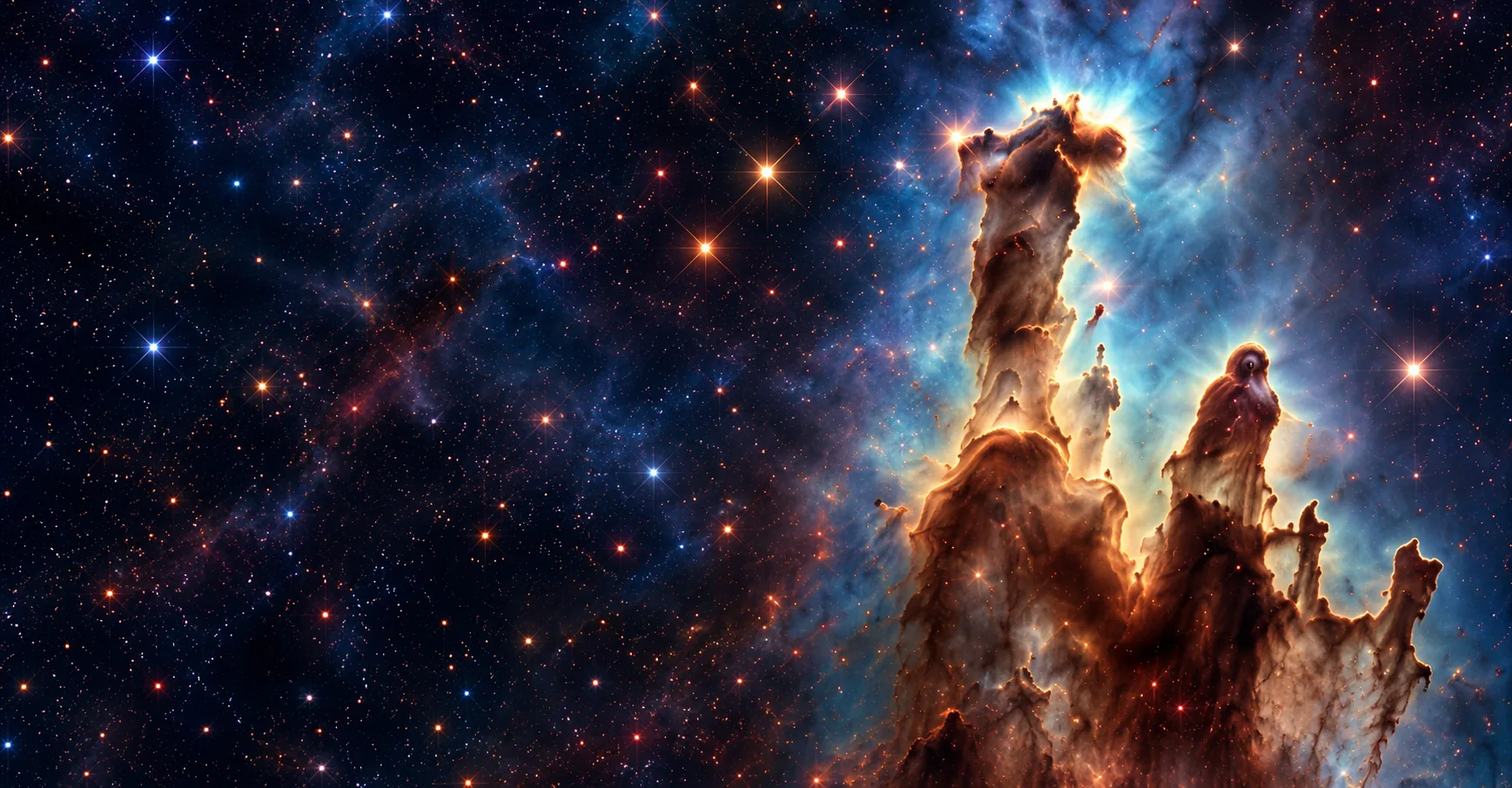
Light is the connection between a distant object and the evidence available to an observer. Different instruments and methods can reveal different aspects of the same region. Ask what the measurement records before deciding what the image proves. Colour in a scientific presentation may encode information rather than reproduce ordinary eyesight. Our atmospheric artwork is illustrative; it carries a visual mood rather than a new observation or an independent scientific result.
When an image seems surprising, begin with its caption and measurement context. Ask what the instrument records, how the information is presented and which part of your interpretation comes from the explanatory text.
Continue with Evidence before certainty.
Stellar lives
Stars are not static decorative points. Their properties and development are topics that scientists investigate through observations and models. A useful introduction connects a star’s environment with the questions being asked about it, rather than offering a single story for every star. Read claims about ages or stages with their source and uncertainty. This overview deliberately avoids unsupported precise lifetimes and instead directs attention to the evidence behind a description.
Choose one statement about a star and trace it to a scientific source. Notice whether the source describes an observation, a model or both. That exercise is useful even without learning every technical detail.
Nebulae and galaxies
Nebulae and galaxies can both appear as striking extended structures in an image, but their visual similarity does not make them the same thing. Start with the physical object identified in the caption. Then ask which features are visible because of the instrument, exposure or processing. A dramatic presentation can make a subject memorable while still needing a careful explanation. Follow the NASA universe reference for topic-specific scientific context and deeper reading.
Compare an evocative image with a scientific explanation of its subject. Identify what the picture makes visible and what must be explained separately. Beauty can encourage curiosity without establishing the underlying physics by itself.
Distance and scale
Distance is easier to discuss when the unit and purpose are explicit. A diagram of nearby worlds and a map of galaxies cannot use the same practical scale. Light-travel time also changes how people talk about what a distant observation represents. Avoid reading a compact illustration as a literal size comparison. When a page gives a numerical example, check the reference, what the number describes and whether it is an estimate with meaningful uncertainty.
Write the unit beside a distance claim and identify the objects being compared. If a diagram compresses scale for readability, keep that limitation attached to the illustration rather than reading its spacing literally.
Continue with Our solar system.
Questions still being studied
Some questions in astronomy are actively being studied rather than settled by a single image or headline. Separate the observation, the model used to explain it and the alternatives still being considered. An unanswered question is not a licence to claim anything; it is a reason to define what evidence would distinguish competing explanations. Our editorial approach makes that separation visible. It favours a clear statement of limits over a dramatic certainty unsupported by the source.
An open research question should say what competing explanations differ about. Ask which observation could distinguish them, and avoid assuming that uncertainty means all proposed accounts have the same evidential support.
Explore the observing and editorial paths
Return to the observable sky after exploring the larger picture. Recognising a constellation can lead to questions about a star, while a planetary observation belongs to a different level of the explanation. The sky guide and solar-system guide provide those connecting routes. Read them as complementary paths rather than a required sequence. Bring a specific question to the contact page if an explanation needs clarification, ideally with the page and public source that prompted it.
Return to a familiar observing question after reading about wider scale. Explain which part belongs to direct viewing and which depends on scientific interpretation. The distinction makes the connection more useful, rather than less atmospheric.
Questions before the next step
Is this a live sky chart?
No. These pages are introductory guides, and atmospheric artwork is illustrative. For an observing session, use a current chart appropriate to your actual location and time. Read its scale, orientation and labels. An image that conveys the mood of the sky should not be used to align an instrument or establish a precise position.
Where should I check a scientific claim?
Follow the linked primary scientific reference and check which observation or explanation supports the statement. A mission image, a diagram and a research result need different context. Our editorial approach describes that distinction. If a claim appears inconsistent with a public source, send the page and precise statement through the contact route.
What is a useful next reading step?
Choose the adjacent guide that answers the question you have now: observing the sky, understanding nearby worlds or exploring wider scale. Keep a note of the assumption or unfamiliar term that needs clarification. The topic links make that route explicit. There is no requirement to read every page before asking a focused editorial question.
Scientific reference
NASA Science: explore the scientific context. Atmospheric and generated scene artwork is illustrative, not a calibrated observing chart.
Start with a clear question
Use the AstroSkyGuide contact page for an astronomy question, a correction or a public topic suggestion. The email button opens your own mail application; review the message before sending and keep credentials or private records out of an initial enquiry.