Home / Our solar system
ASTROSKYGUIDE
Our solar system: nearby worlds and connected orbits
Our solar system: nearby worlds and connected orbits. Explore scientifically careful astronomy explanations with atmospheric, clearly labelled illustrations. This guide makes the question, evidence and next steps easier to follow while keeping the scope of the page clear. Use the topic links to choose the next explanation or open a focused enquiry.
On this page
A connected planetary system
The solar system offers a useful first framework for understanding our place in space. The Sun provides the central reference point for a connected family of planets and smaller bodies. Begin with the relationship between an object and its surroundings rather than treating each world as an isolated fact card. Ask what the object is made of, how it moves and what observations support the explanation. Those questions remain useful as the detail becomes more complex.
A solar system reading note can separate the object’s broad category, the feature being discussed and the evidence used to describe it. This small structure helps prevent a memorable image from replacing the explanation.
Orbits and apparent motion
An orbit is a physical path, while the position an observer sees is a matter of viewing geometry. Earth is moving too, so an object’s apparent motion across our sky needs that wider context. A schematic can clarify the relationship without reproducing every distance or size accurately. Read its labels before interpreting it. The diagrams accompanying this guide are explanatory illustrations, not navigation tools or a prediction of a planet’s position tonight.
A solar system diagram should state whether its sizes and distances are scaled. When they are not, use it to understand relationships rather than estimate physical dimensions from the amount of space on the page.
Continue with Evidence before certainty.
Rocky planets and giant planets
Grouping planets can make unfamiliar worlds easier to compare. Rocky worlds raise questions about surfaces and geology; giant planets introduce different structures and environments. A category is a useful starting point, not a claim that its members are interchangeable. Compare the same feature across two worlds before collecting unrelated facts. For current mission findings and planetary explanations, the linked NASA reference provides a dated source rather than an undated numerical claim here.
Compare two solar system objects using the same question, such as what a source says about their surfaces or environments. That is more informative than comparing isolated facts collected for different purposes.
Moons, asteroids and comets
Moons, asteroids and comets open up questions that a planets-only picture can miss. An object’s name does not by itself explain its history or behaviour. Follow the evidence about its material, orbit and interactions with other bodies. Smaller does not mean scientifically unimportant. A useful reading exercise is to ask which observation changed the explanation of a particular object, and whether that finding applies broadly or to one unusual case.
The solar system includes scientific questions beyond the familiar planet sequence. When reading about a smaller body, ask why that particular observation matters rather than assuming that physical size determines its research importance.
Light and observation
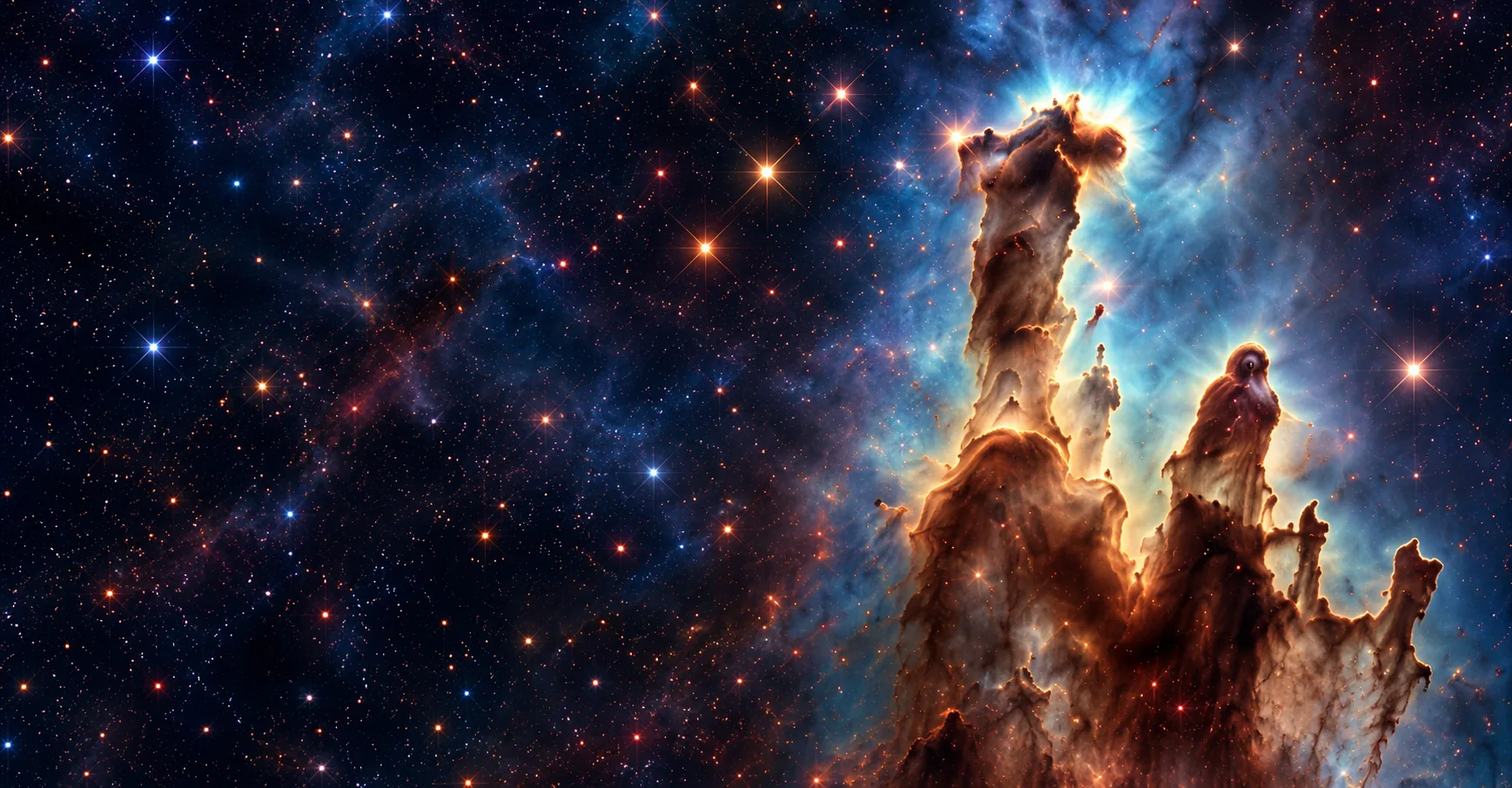
Observation connects physical conditions with the light that reaches us. Ask whether you are looking at reflected light, emitted light or a processed scientific image. The phase and apparent brightness of a nearby world require a viewing context. A beautiful image can reveal detail that is unavailable to the naked eye. Its caption should explain the instrument and processing so that visual impact is not confused with an ordinary observing experience.
Check whether an image describes visible appearance or a scientific measurement. A caption may explain processing or instrument settings that matter to its interpretation. Preserve that context when sharing the image with someone else.
Continue with The wider universe.
How knowledge changes
Scientific understanding is revised through observations, measurements and explanations that can be questioned. A mission result may confirm part of a model while opening a new problem elsewhere. Distinguish an established broad description from a current research question. When reading a headline, follow the underlying source and check the date. A discovery is more informative when you know what was actually measured and what remains an interpretation of that measurement.
A claim about a mission result should identify the observation and its date. Read what changed in the explanation, then ask which earlier assumptions still hold and which need to be reconsidered.
From nearby worlds to deep space
Use this guide as a bridge between observing the sky and understanding more distant systems. The sky guide explains how to frame an observing session; the wider-universe guide introduces stars, nebulae and galaxies. Comparing those levels helps avoid treating every luminous point as the same kind of object. Follow the editorial approach when checking a scientific claim. Curiosity becomes more productive when an interesting question leads to a source you can examine.
Questions before the next step
Is this a live sky chart?
No. These pages are introductory guides, and atmospheric artwork is illustrative. For an observing session, use a current chart appropriate to your actual location and time. Read its scale, orientation and labels. An image that conveys the mood of the sky should not be used to align an instrument or establish a precise position.
Where should I check a scientific claim?
Follow the linked primary scientific reference and check which observation or explanation supports the statement. A mission image, a diagram and a research result need different context. Our editorial approach describes that distinction. If a claim appears inconsistent with a public source, send the page and precise statement through the contact route.
What is a useful next reading step?
Choose the adjacent guide that answers the question you have now: observing the sky, understanding nearby worlds or exploring wider scale. Keep a note of the assumption or unfamiliar term that needs clarification. The topic links make that route explicit. There is no requirement to read every page before asking a focused editorial question.
Scientific reference
NASA Science: explore the scientific context. Atmospheric and generated scene artwork is illustrative, not a calibrated observing chart.
Start with a clear question
Use the AstroSkyGuide contact page for an astronomy question, a correction or a public topic suggestion. The email button opens your own mail application; review the message before sending and keep credentials or private records out of an initial enquiry.