Home / Evidence before certainty
ASTROSKYGUIDE
Astronomy research: Evidence before certainty
Astronomy research: Evidence before certainty. Explore scientifically careful astronomy explanations with atmospheric, clearly labelled illustrations. This guide makes the question, evidence and next steps easier to follow while keeping the scope of the page clear. Use the topic links to choose the next explanation or open a focused enquiry.
On this page
Evidence before certainty
Astronomy research becomes useful to a reader when the chain from claim to evidence is visible. A convincing explanation should identify what was observed, how it was studied and what conclusion follows. A headline is an introduction to that chain, not a substitute for it. Our editorial direction is to make difficult ideas approachable while keeping the boundaries of the evidence intact. Atmosphere and clarity can coexist with scientific precision.
For astronomy research, a useful claim record has a statement, a source and the part of that source supporting it. Add the limits that matter to the reader instead of hiding them in a general disclaimer.
Primary sources and dated evidence
Prefer the original research publication, mission report or official scientific explanation when evaluating a claim. A secondary summary may help with context, but it should not conceal the primary source. Check the publication date and distinguish an older foundational explanation from a new result. If two accounts differ, investigate what each actually measures before choosing the more dramatic version. A source link lets the reader follow that decision.
When checking astronomy research, read the source’s purpose before borrowing its conclusion. A mission update, introductory explanation and specialist paper can be authoritative in different ways without answering exactly the same question.
Continue with The wider universe.
Images and diagrams
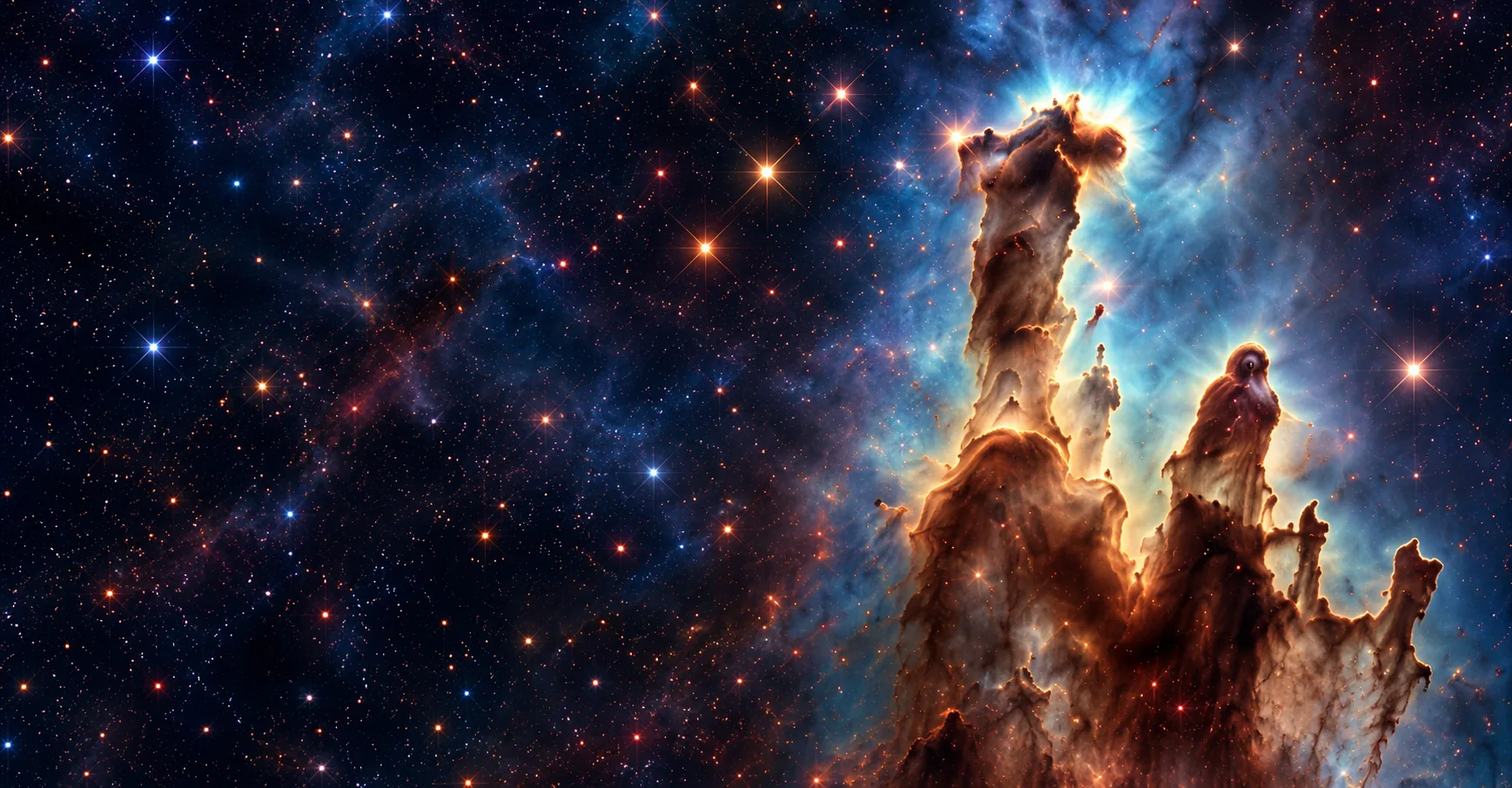
Images need a clear identity. A mission photograph, a processed scientific observation, a labelled schematic and generated illustrative artwork are different kinds of material. Their captions should tell readers which they are seeing. AstroSkyGuide‘s atmospheric scenes are illustrations and do not certify star positions or instrument measurements. A visual should help someone understand the text, while the source and licence record remain available for genuine scientific photographs used later.
In astronomy research, captions should keep an image’s identity intact when it is reused. A generated scene must remain labelled illustrative, and a scientific observation should retain the context needed to interpret its presentation.
Separate observation and inference
Observation and inference belong next to each other, but they should not be collapsed into one claim. Explain what a measurement establishes and what a model contributes to the interpretation. State uncertainty where it matters to the question. Avoid turning a limited result into a universal conclusion. A useful explanation can say that a finding is interesting while also describing what further observation would be needed to strengthen it.
A careful astronomy research explanation can show where an inference begins. Ask what the source observed and what additional reasoning connects that observation to the conclusion being discussed; preserve uncertainty in that connection.
Corrections and questions
Corrections work best when they identify something that can be checked. Send the page address, the precise statement and a relevant public source. Explain whether the concern is a factual error, a misleading illustration or missing context. Do not include private records or credentials. An editorial enquiry is a way to raise a question; this page does not promise a particular reply time or describe a formal peer-review service.
Frame a correction so another reader could check it: quote the short disputed statement, provide the page address and link the relevant public evidence. Explain whether the issue is accuracy, interpretation or missing context.
Continue with Our solar system.
Explore the topic collection
The topic guides give readers several ways into the subject. Start with observing the night sky, move to the nearby worlds of the solar system or explore the wider universe. Follow the references within those pages and distinguish the introductory overview from a specialist publication. If a source changes the interpretation, the explanation should change with it. That approach keeps the learning journey connected without presenting every unanswered question as settled.
Choose the topic guide that matches your question, then follow its scientific reference. The guide should make the route easier to understand without suggesting that an introductory page replaces a specialist publication.
Questions before the next step
Is this a live sky chart?
No. These pages are introductory guides, and atmospheric artwork is illustrative. For an observing session, use a current chart appropriate to your actual location and time. Read its scale, orientation and labels. An image that conveys the mood of the sky should not be used to align an instrument or establish a precise position.
Where should I check a scientific claim?
Follow the linked primary scientific reference and check which observation or explanation supports the statement. A mission image, a diagram and a research result need different context. Our editorial approach describes that distinction. If a claim appears inconsistent with a public source, send the page and precise statement through the contact route.
What is a useful next reading step?
Choose the adjacent guide that answers the question you have now: observing the sky, understanding nearby worlds or exploring wider scale. Keep a note of the assumption or unfamiliar term that needs clarification. The topic links make that route explicit. There is no requirement to read every page before asking a focused editorial question.
Scientific reference
NASA Science: explore the scientific context. Atmospheric and generated scene artwork is illustrative, not a calibrated observing chart.
Start with a clear question
Use the AstroSkyGuide contact page for an astronomy question, a correction or a public topic suggestion. The email button opens your own mail application; review the message before sending and keep credentials or private records out of an initial enquiry.